
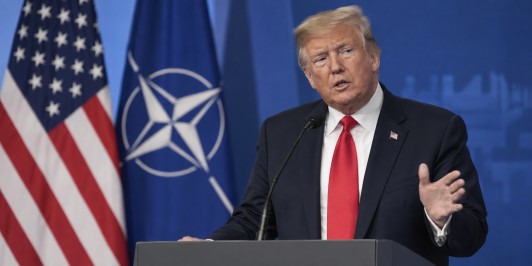
In a strategic move to bolster military capabilities, NATO allies have committed to significantly increasing their defense and security spending. By 2035, these countries aim to allocate 5% of their GDP towards defense, marking a notable shift from the previous 2% benchmark. This development was introduced as part of a broader effort to enhance the alliance’s collective security and defense infrastructure.
US President Donald Trump expressed his approval of this commitment during his address at the United Nations General Assembly in New York. He emphasized the importance of this increase, noting that it represents a substantial step forward for NATO. The agreement, reached at the 2025 NATO Summit in The Hague, outlines that 3.5% of GDP will be dedicated to core defense requirements, while an additional 1.5% will support defense-related investments and security needs.
The decision to boost defense spending comes amid ongoing global security challenges. NATO highlighted that European allies and Canada have already increased their combined core defense expenditure by nearly 20% in real terms in 2025 compared to the previous year. This commitment is seen as a crucial part of NATO’s strategy to strengthen military production and fortify collective defense mechanisms.
In his speech, President Trump also addressed the Russia-Ukraine war, calling for an end to the conflict that continues to cause significant loss of life. He assured that the United States would persist in its diplomatic efforts to resolve the situation, underscoring the broader context of international peace and security that frames the increased defense spending.
This move by NATO allies reflects an acknowledgment of the evolving security landscape and a shared resolve to enhance capabilities in response to emerging threats. As these countries work towards the 2035 target, the commitment underscores the importance of a unified approach to defense and the readiness to invest in the future security of the alliance.