
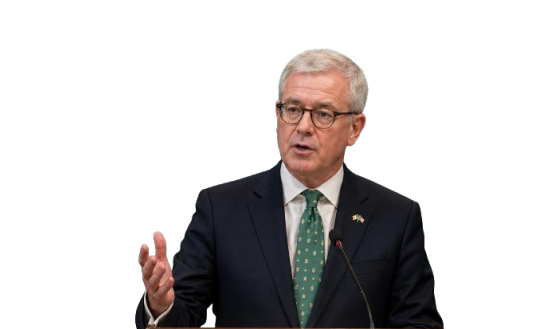
As the European Union continues to build its international alliances, India stands out as a pivotal strategic partner, particularly in the realms of trade, technology, security, and connectivity. This burgeoning relationship aims to culminate in the signing of a landmark Free Trade Agreement (FTA) by the year’s end. Irish Ambassador Kevin Kelly, marking the beginning of Ireland’s presidency of the Council of the European Union, emphasized that the collaboration between the EU and India transcends trade. It extends into significant areas such as technology, research, climate action, maritime security, resilient supply chains, and digital cooperation. This partnership is strengthening as both India and the EU seek to tackle global challenges together while fostering long-term economic growth.
Negotiations for the India-EU Free Trade Agreement have reached completion, and the formal signing is anticipated by December. This agreement is expected to be operational early next year and is set to enhance cooperation in critical sectors including defense, security, and emerging technologies. These developments come amid changing global economic and geopolitical conditions, prompting both sides to fortify their ties in pursuit of mutual benefits.
The EU’s commitment to this partnership was further articulated by EU Ambassador Herve Delphin, who highlighted the need for both Europe and India to adapt to an evolving global landscape. This adaptation involves a pursuit of greater strategic autonomy while maintaining robust partnerships. Delphin stressed the significance of safeguarding freedom of navigation and securing global trade routes, advocating for increased collaboration between India and the EU in maritime security and regional stability.
As these discussions progress, both parties are keenly aware of the broader implications of this strengthened partnership. The EU and India are aligning their efforts to address shared challenges, aiming to foster a more cohesive and stable international environment. By enhancing their cooperation, they not only aim to secure economic growth but also to contribute meaningfully to global security and technological advancement.