
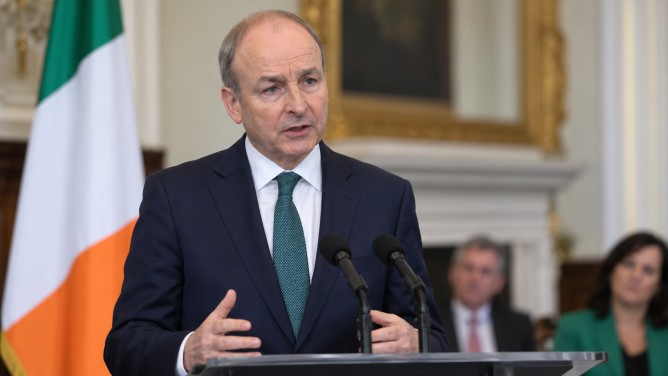
The European Union is grappling with the challenge of reaching a consensus on its upcoming seven-year budget, amid divergent views among member states. Irish Taoiseach Micheál Martin remains optimistic that an agreement can be achieved by the conclusion of Ireland’s EU presidency, even as debates continue over spending levels and priorities.
The Irish government has introduced a draft negotiating framework that builds on the European Commission’s initial €1.72 trillion proposal. This draft has faced criticism from several member states advocating for deeper spending cuts, while the Commission contends it compromises financial flexibility and essential safeguards. Martin acknowledged the complexity of reconciling these competing demands, noting that while some nations advocate for a reduced budget, others emphasize the importance of maintaining funding for regional development and the Common Agricultural Policy. Ireland’s proposal, he said, aims to expedite negotiations rather than address every member state’s preferences.
As the negotiations proceed, European Council President António Costa and EU national leaders will take a central role. Martin emphasized that Ireland will continue to serve as a constructive and neutral chair throughout its presidency. Securing an agreement by December is crucial to ensure the budget is ratified and ready to be implemented by January 1, 2028.
In addition to budgetary discussions, EU leaders are set to tackle other pressing issues, such as rising trade tensions with China, escalating energy prices, and the ongoing conflict involving the United States, Israel, and Iran. Relations with China are under scrutiny, especially following a deal to curb Chinese hybrid car imports. The EU aims to address its goods trade deficit with China, which stood at €360 billion in 2025. Proposals from France and Germany for stronger measures against imports of chemicals and polyethylene terephthalate (PET) plastics are also anticipated to be examined.
Energy costs remain a critical concern as global oil and gas market tightening threatens to hike household electricity bills during the winter months. EU leaders are considering additional short-term measures to complement existing energy and emissions regulations.
The summit will further discuss continued support for Ukraine amidst intensified Russian attacks and uncertainties regarding US assistance. Ukrainian President Volodymyr Zelenskyy is expected to meet with European leaders to seek further political, financial, and military aid for Kyiv.