
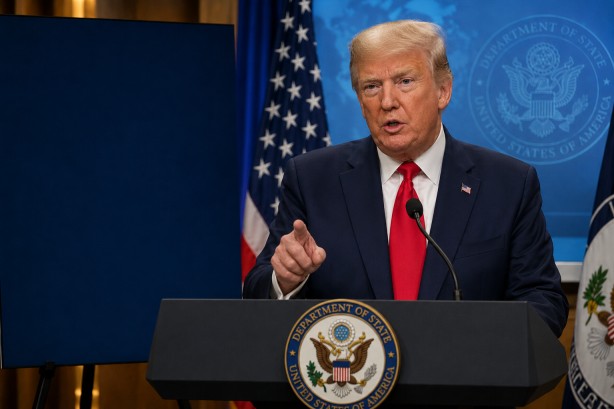
The United States has unveiled a new set of sanctions that focus on Iran and entities continuing to engage in business with Tehran. This move is part of Washington’s strategy to amplify economic pressure on the Iranian government. US Treasury Secretary Scott Bessent outlined the expansion of secondary sanctions aimed at countries, companies, and other entities involved in economic dealings with Iran. He cautioned that businesses maintaining ties with the Iranian government risk facing US penalties.
This initiative is intended to curb Iran’s access to international financial resources, thereby weakening its capability to fund governmental operations without resorting to a military intervention. While Washington has not imposed a firm deadline for countries or companies to cease business activities with Iran, officials have stressed that US patience is not indefinite. The sanctions arrive at a time when Iran is grappling with severe economic challenges, as evidenced by the sharp decline in the value of the Iranian rial and the imposition of restrictions on oil exports, which is a significant source of revenue for the country.
The new sanctions could potentially generate friction with nations that continue to maintain economic relations with Iran, such as China, Russia, India, Pakistan, Qatar, and Turkey. US President Donald Trump has characterized Iran’s predicament as increasingly precarious, as Washington persists in its efforts to negotiate a more comprehensive agreement with Tehran. These efforts are occurring alongside separate talks concerning the strategic Strait of Hormuz.
The success of these sanctions largely hinges on the extent to which other countries and businesses adhere to Washington’s directives, as well as the degree to which the measures effectively diminish Iran’s access to foreign income. As the international community watches closely, the impact of these sanctions on Iran’s economic landscape and its broader geopolitical relations remains to be seen.