
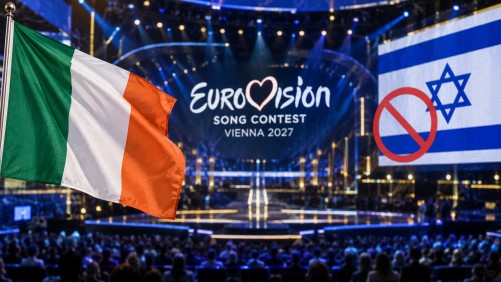
The ongoing humanitarian crisis in Gaza has prompted Ireland to withdraw from participating in the 2027 Eurovision Song Contest, a decision confirmed by the national broadcaster RTÉ. This move underscores the growing international concern over the conflict and its impact on civilian lives, as well as the challenges faced by journalists trying to access the area.
RTÉ stated that the current conditions in Gaza made it untenable to justify Ireland’s involvement in the event. The broadcaster emphasized the severe restrictions imposed on international journalists attempting to cover the crisis, which has further fueled their decision to distance from the contest.
The European Broadcasting Union (EBU), responsible for organizing the Eurovision Song Contest, acknowledged Ireland’s stance and expressed hope for the country’s return to future competitions. This marks the second consecutive year that Ireland has opted out, having previously boycotted the 2026 contest alongside the Netherlands, Spain, Iceland, and Slovenia due to the EBU’s inclusion of Israel.
In addition to Ireland, the Netherlands has also signaled its intention to skip the 2027 contest, although there is speculation about the possibility of another broadcaster stepping in to represent the nation. Meanwhile, Spain, Iceland, and Slovenia have yet to decide on their participation.
The 2027 Eurovision Song Contest is scheduled to be held in Burgas, Bulgaria, in May. As the event approaches, the decisions of countries like Ireland and the Netherlands highlight the complex interplay between global politics and cultural events, with the humanitarian situation in Gaza serving as a significant factor in shaping these choices.